Open Sea For Animals Speed Upgrade: How to Buy It and What It Changes
How to buy the Open Sea For Animals Speed upgrade, how its Cash price escalates, and what it changes on sea runs — and when to buy something else.
Quick answer
Movement speed in Open Sea For Animals is bought, not trained: you purchase the Speed upgrade in the upgrade shop — the same Upgrades menu that offers more carrying amount — using in-game Cash.
- Repeatable purchase, not a one-time unlock
- Paid with in-game Cash, and the price climbs with each purchase
- Sold in the upgrade shop alongside Carry
What the Speed upgrade costs
Speed is paid for with Cash, and the price goes up from purchase to purchase instead of staying flat. Recorded play makes that ladder visible: one player bought Speed several separate times in a single session ("let's also buy some more speed", "let's just upgrade our speed one time") and reacted to the climbing cost mid-run: "Why are speed upgrades getting so expensive? 44 billion just for one upgrade." After a later purchase they called it "literally the most expensive speed upgrade in all of history."
That 44 billion is a single late-session purchase, not the price you will see on your first buy. Recorded play does not pin down a first-level cost, a full cost ladder, or a max Speed level, and the game's own listing says it "UPDATES EVERY SATURDAY!" — so the number on your live upgrade panel is the one that counts. Recheck it after balancing updates.
The loop Speed operates in
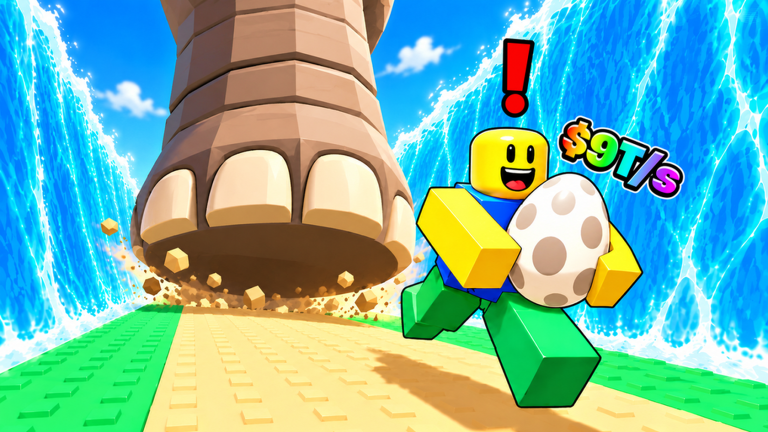
Open Sea For Animals is a Roblox simulation tycoon by xFrozen x Dudes. You split the sea to reach Eggs, then run back to your base before the waves close. Recovered eggs are placed to hatch, and the resulting Animals earn the Cash your escalating Speed purchases are paid with. The run-back-before-the-waves-close window is exactly the constraint Speed operates within.
What Speed changes on a run
Gameplay recordings show the effect right after purchase. One player described the next attempt as "Way, way better. We might even be able to go further." After another buy, a run reached Bat egg and T-Rex egg depth — "We make it all the way down there" — and a later Speed purchase came right before breaking "into the fourth section" of the map. Players also plan around it: "Spend some more on speed and see if we make it to maybe the mammoth." The egg economy loops back into the upgrade: better hatched Animals change how fast you buy Speed and reach farther Eggs.
Two boundaries apply. The recordings document reach and return outcomes, not stat numbers — there is no fixed per-level speed value or percentage gain to quote, so judge the upgrade by how far your next run gets and whether it gets home. And single purchases are run-dependent: one session first shrugged off a Speed buy ("That isn't going to help us get the rarest eggs") before later purchases visibly extended reach.
When Speed is the right buy
Speed answers one specific failure: you reach the egg but struggle to get home. The working rule is to match the purchase to the failed step — training and staff for reach, Speed and a shorter path for the return, Carry for useful extra pickups, or animal production when Cash is the constraint.
To confirm Speed is your fix, test it on a fixed route: note your turnaround point and current Speed, buy Speed, then repeat the same short pickup and check whether it returns with more room to spare.
Keep three limits in mind. Buying Carry will not shorten a return route, and Speed does not answer every reach problem — Strength and staff reach are separate purchases. Speed does not lengthen the wave timer or stretch how far the sea opens. And it does not guarantee a return: one recorded run still failed with "I took too long" immediately after buying "two more speed." Speed changes your pace inside the open-sea window; route length and turnaround timing still decide whether a trip succeeds.
Open the upgrade shop, read the current price on the panel for yourself, and match the buy to the step your last run actually failed on.